

Hindrance vs. obstruction: what’s the difference?
The short answer
Hindrance often implies something that makes a task or progress more difficult, but doesn’t necessarily stop it entirely, and can refer to both physical and abstract difficulties. Obstruction typically suggests a more complete or physical blocking or stopping of progress, and is more often used in a literal, physical sense.
What they have in common
Both hindrance and obstruction refer to something that blocks, delays, or makes progress difficult. They both suggest interference with the normal course of events and can be used to describe physical or figurative barriers.
Examples
hindrance
- Her lack of experience was a hindrance to getting the job.
- Heavy traffic is always a hindrance to quick delivery.
- The complicated instructions became a hindrance rather than a help.
obstruction
- The fallen tree was an obstruction on the road.
- He was arrested for obstruction of justice.
- A blood clot can cause an obstruction in a blood vessel.
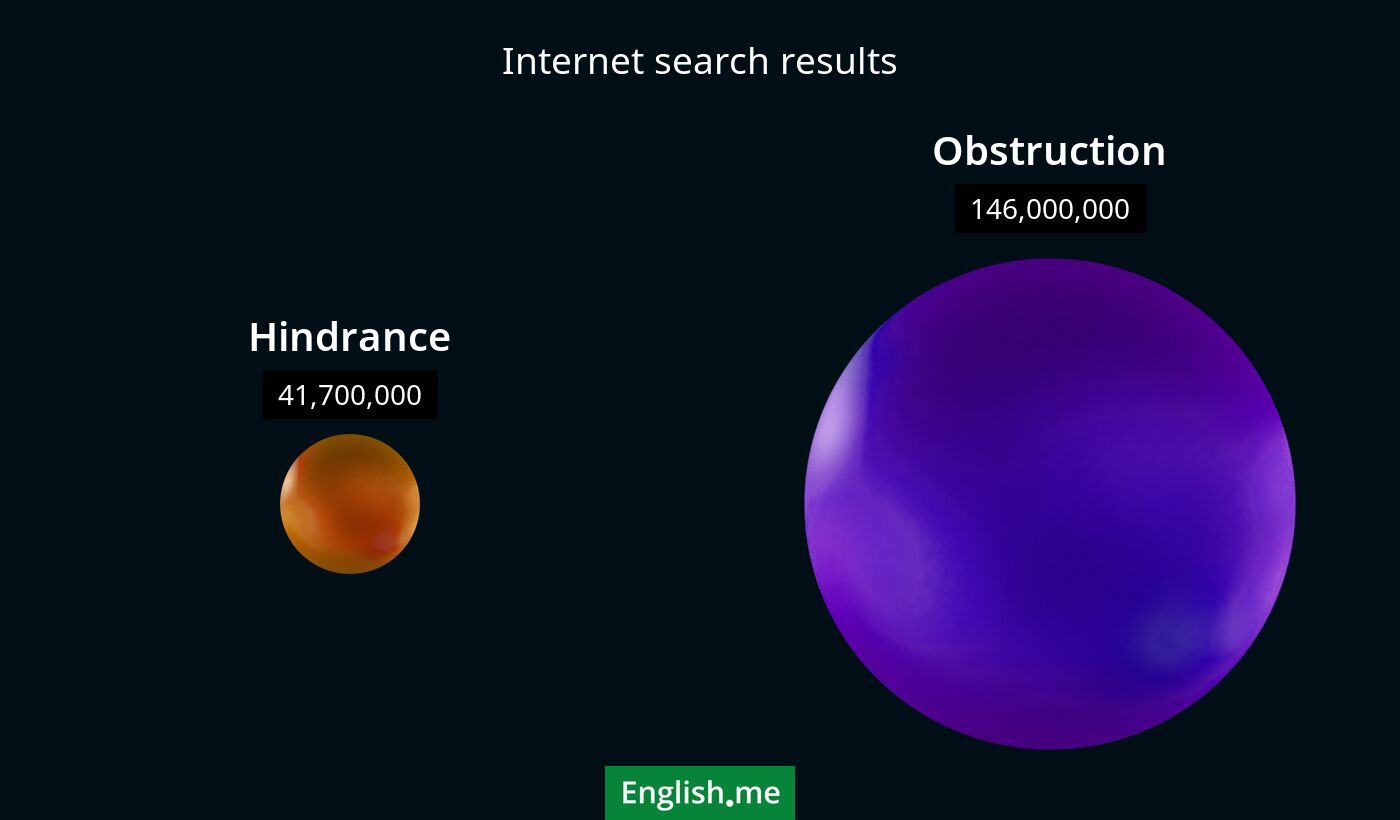
Which one is more common?
Spotted a mistake in this article? Tell us