

Mud vs. muck: what’s the difference?
The short answer
Mud specifically denotes wet, soft earth resulting from the mixing of soil and water. It is a general term for such conditions. Muck can refer to mud but also encompasses dirt, filth, or manure, often with a stronger connotation of being unpleasant or foul. Additionally, muck can be used as a verb meaning to remove manure or to mess up something (e.g., Don’t muck up the plan).
What they have in common
Both mud and muck refer to wet, soft, and messy substances that can soil or dirty objects and people. They are associated with soil mixed with water and are often used to describe muddy or boggy conditions. Both words can also be used metaphorically to represent difficult or messy situations.
Examples
mud
- The children loved playing in the mud after the rainstorm.
- Her boots were caked with mud from the hiking trail.
- The truck got stuck in the thick mud.
muck
- She scraped the muck off her boots before going inside.
- Wipe that muck off your hands before touching anything.
- They had to wade through the muck to reach dry land.
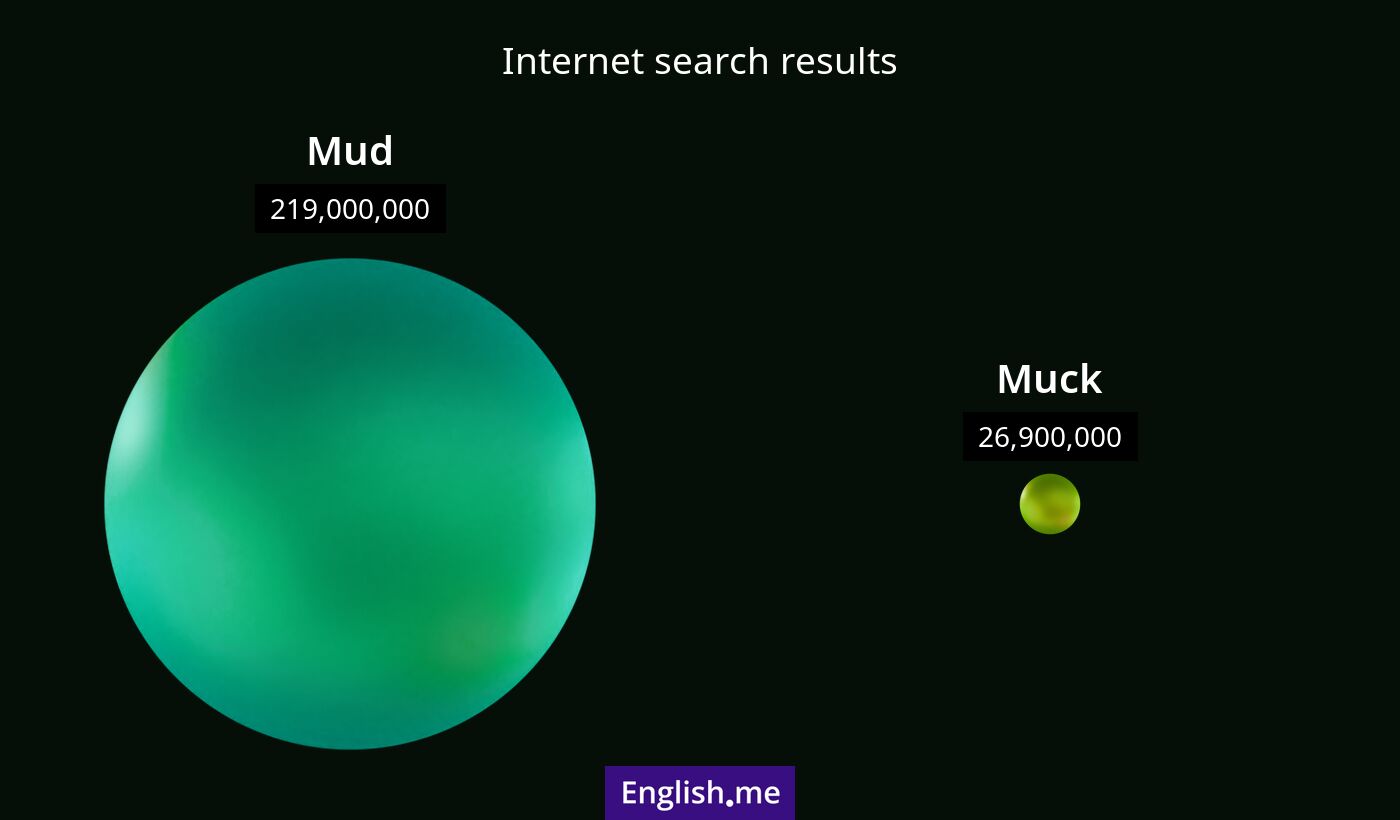
Which one is more common?
Spotted a mistake in this article? Tell us