

Prejudice vs. bias: what’s the difference?
The short answer
Prejudice often implies a more deeply held, unfavorable judgment or stance, often with a negative connotation related to discrimination. Bias is a more general term and can be either positive or negative, describing a tendency to lean towards a particular perspective, viewpoint, or experience.
What they have in common
Both terms refer to a preconceived opinion or feeling, often without proper knowledge, thought, or reason, and can lead to unfair treatment or attitudes towards people, groups, or ideas.
Examples
prejudice
- Her prejudice against people from different countries affected her ability to collaborate effectively.
- He had a deep-seated prejudice that was hard to change.
bias
- The study demonstrated a clear bias in the selection process.
- She was accused of showing bias towards her friend during the competition.
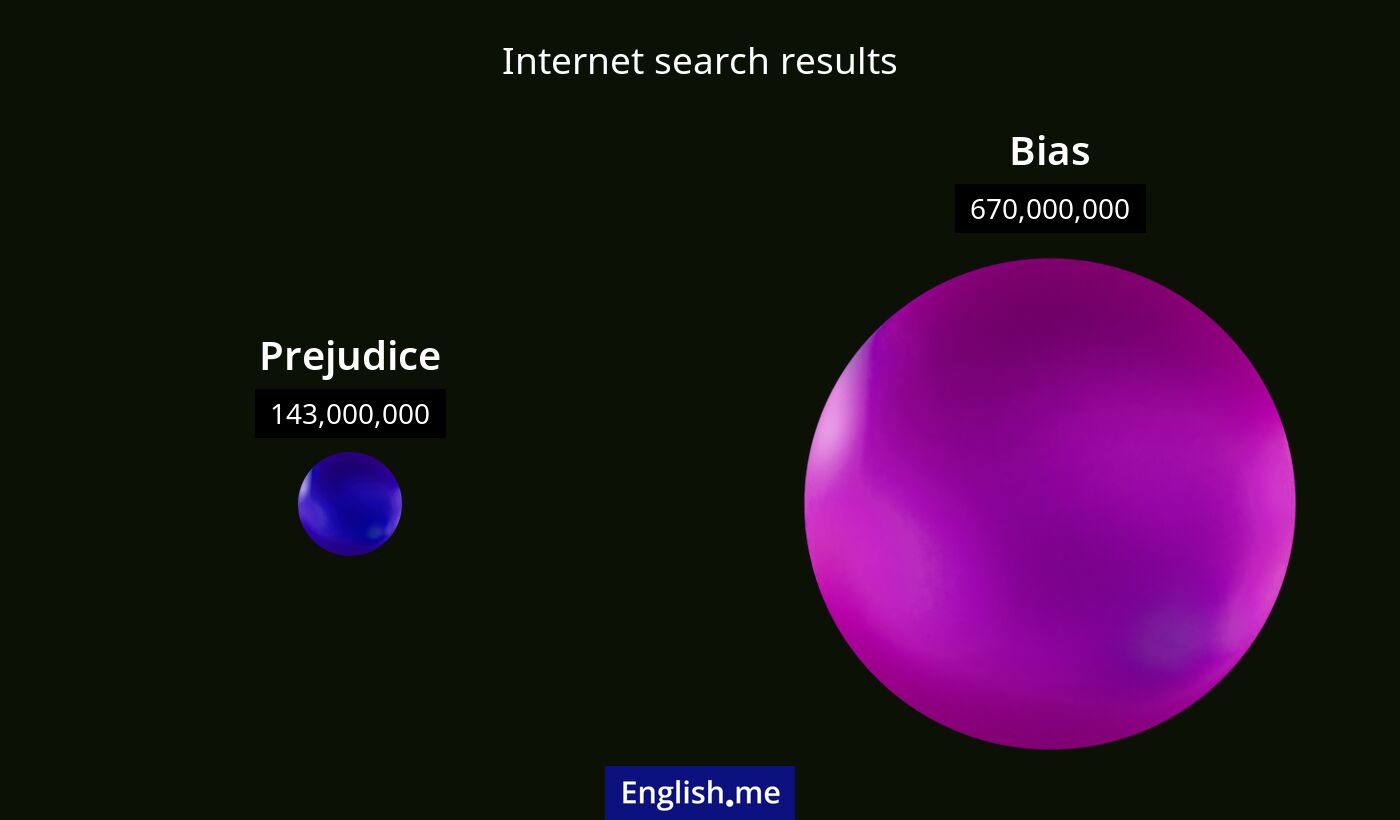
Which one is more common?
Spotted a mistake in this article? Tell us