

“When the cat is away, the mice will play”: meaning, origin and examples
What it means
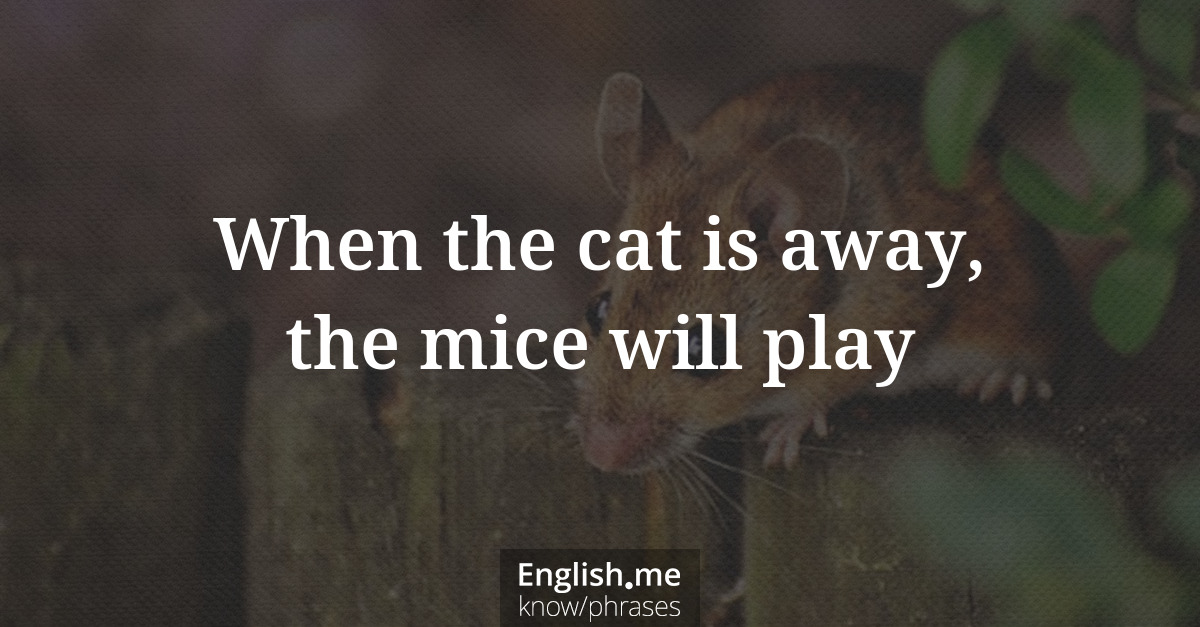
This phrase means that when authority figures or supervisors are absent, those under their supervision will take the opportunity to engage in activities they may not be allowed to do otherwise.
Tone Playful
Where it comes from
The phrase is derived from a medieval Latin proverb: Dum felis dormit, mus gaudet et exsi litantro, which translates to “When the cat sleeps, the mouse leaves its hole, rejoicing”.
Examples
- The manager was on vacation, and the office was much louder than usual. It’s true: when the cat’s away, the mice will play.
- As soon as the teacher left the classroom, the students started talking and laughing among themselves. When the cat is away, the mice will play.
Spotted a mistake in this article? Tell us