

Land vs. territory: what’s the difference?
The short answer
Land generally refers to the solid part of the Earth’s surface or a specific piece of ground, and is often used in contexts regarding agriculture, real estate, or natural features. Territory usually implies a region or area under the jurisdiction or control of a governmental entity or group and often emphasizes political or jurisdictional boundaries.
What they have in common
Both land and territory refer to areas of Earth’s surface and can be used in contexts related to geography, ownership, and political domains.
Examples
land
- The farmer owns a large piece of land just outside the city.
- They decided to build their house on a piece of land overlooking the lake.
- The explorers finally reached the land after months at sea.
territory
- The country expanded its territory after the war.
- Wolves are known to fiercely defend their territory.
- The disputed territory has been a source of tension between the neighboring nations.
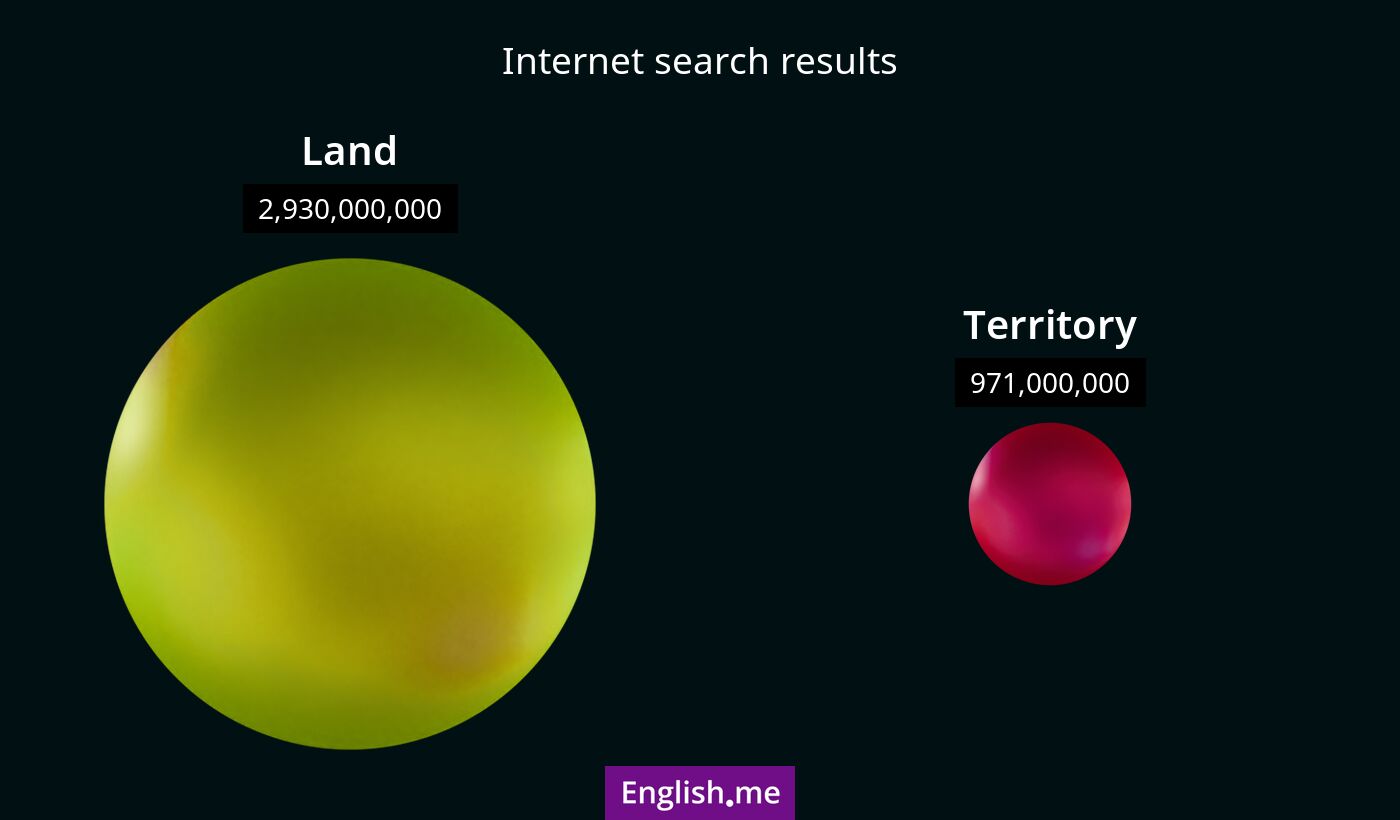
Which one is more common?
Spotted a mistake in this article? Tell us