

Overwhelm vs. overload: what’s the difference?
The short answer
Overwhelm usually refers to emotional or psychological experiences, such as being flooded with emotions or demands, while overload is more often used for physical or technical contexts, describing too much of something (like work, weight, or information) causing systems or people to struggle.
What they have in common
Both overwhelm and overload describe situations where something exceeds normal limits or capacity, often resulting in negative effects such as stress or inability to function properly.
Examples
overwhelm
- She felt overwhelmed by the amount of work she had to finish before the deadline.
- The team was overwhelmed with requests after their successful product launch.
overload
- The electrical circuit will overload if you plug in too many devices.
- He didn’t want to overload himself with too many responsibilities at once.
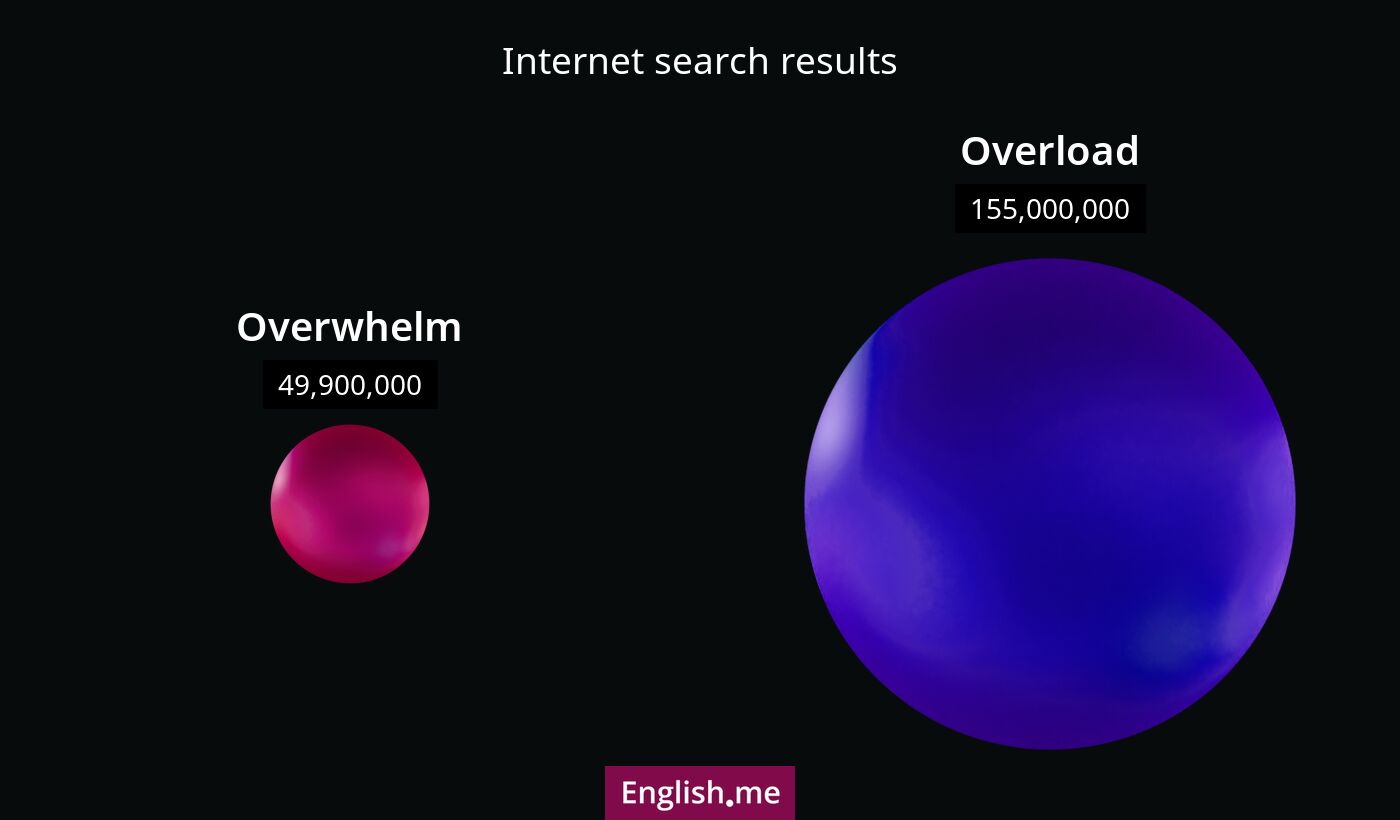
Which one is more common?
Spotted a mistake in this article? Tell us