

Scant vs. meager: what’s the difference?
The short answer
The word scant often implies a quantity that is just barely available or present, sometimes suggesting there is slightly less than what is needed, while meager typically emphasizes a more pronounced insufficiency or poverty. Scant can also imply a notion of being skimpy or sparse in coverage, whereas meager conveys a sense of being lacking in richness or quality.
What they have in common
Both scant and meager describe a quantity or amount that is insufficient or lacking. They often imply inadequacy and are used to indicate that something is smaller or less than desired.
Examples
scant
- The recipe called for a scant teaspoon of salt, which barely influenced the flavor.
- The information provided was scant, leaving many questions unanswered.
- Due to the scant evidence, the jury found it difficult to reach a conclusive verdict.
meager
- After paying all the bills, their savings were meager.
- The young boy’s meager diet left him feeling constantly hungry.
- The scholarship offered meager support for the student’s expenses.
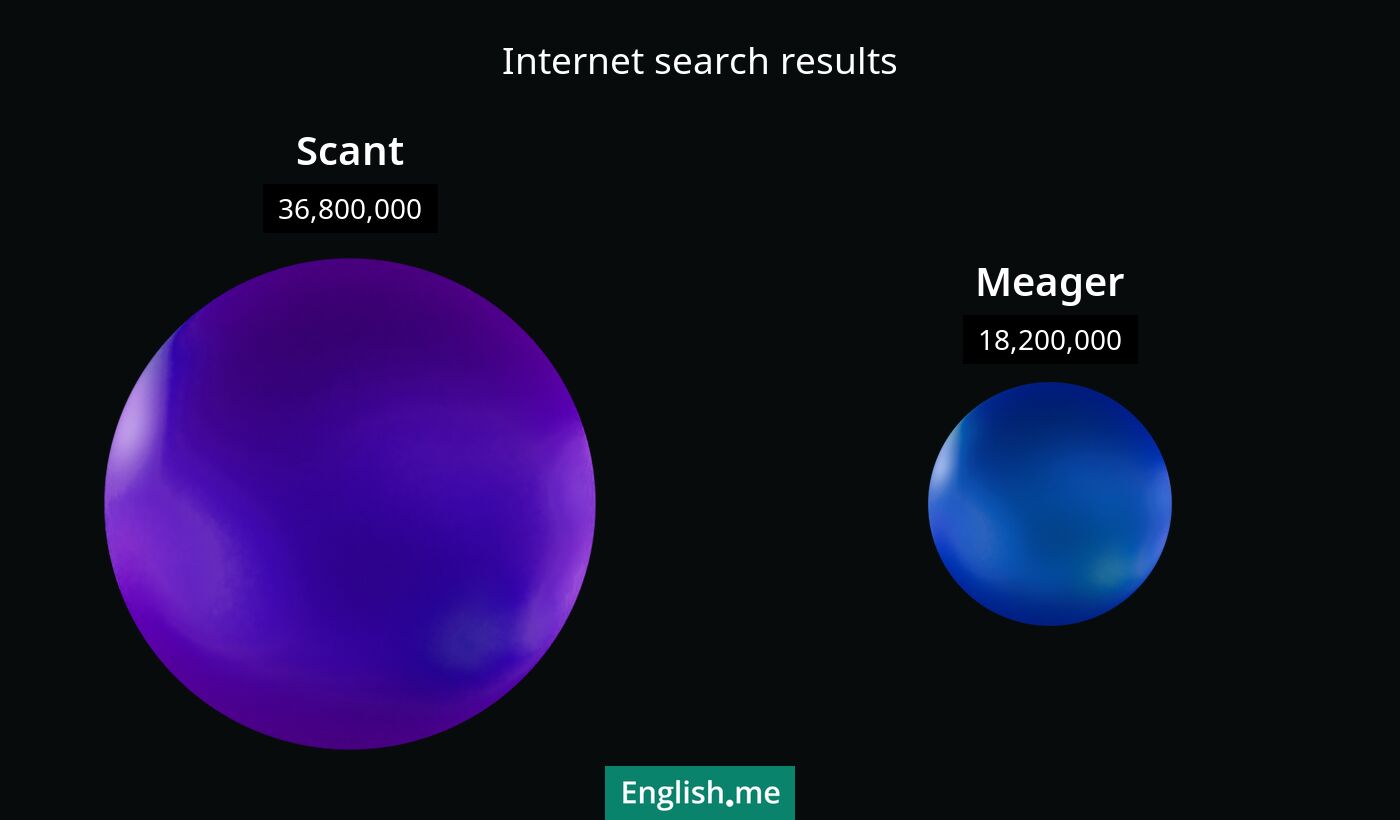
Which one is more common?
এই লেখায় কোনো ভুল চোখে পড়েছে? আমাদের জানান