

Afraid vs. scared: what’s the difference?
The short answer
Afraid and scared both mean “feeling fear”, and in most sentences you can use either. Scared is a little more informal. The main grammar difference is that scared can go before a noun (a scared child), but afraid can’t.
How they differ
Before a noun. Afraid belongs to a small group of adjectives, like asleep and alone, that can’t go before a noun. You can say The child was afraid, but not an afraid child. Scared works in both places: The child was scared and a scared child.
Polite bad news. I’m afraid often has nothing to do with fear. It’s a polite way to introduce something the listener won’t like: I’m afraid we’re fully booked tonight. Scared can’t be used like this.
The verb. Scared comes from the verb scare: The noise scared me. There is no verb afraid.
What they have in common
Both describe fear, and both are followed by the same words: of + noun or -ing (afraid of the dark, scared of flying) and to + verb (afraid to ask, scared to look). In conversation, scared usually sounds more natural; afraid is a little more neutral and is common in writing.
Examples
afraid
Feeling fear or worry. It only comes after a verb such as be, feel or look. I’m afraid… also has a polite use: it softens bad news.
- She’s afraid of heights, so she never goes near the edge.
- Don’t be afraid to ask for help.
- I’m afraid I can’t come on Friday.
scared
Feeling fear. Slightly informal. It works before a noun and after a verb, and it is also the past form of the verb scare.
- He looked scared when the lights went out.
- A scared little boy was waiting outside the classroom.
- You scared me! I didn’t hear you come in.
How to remember it
Try the word before a noun. If it sounds wrong (an afraid boy), use scared, or move afraid after the noun: a boy who was afraid.
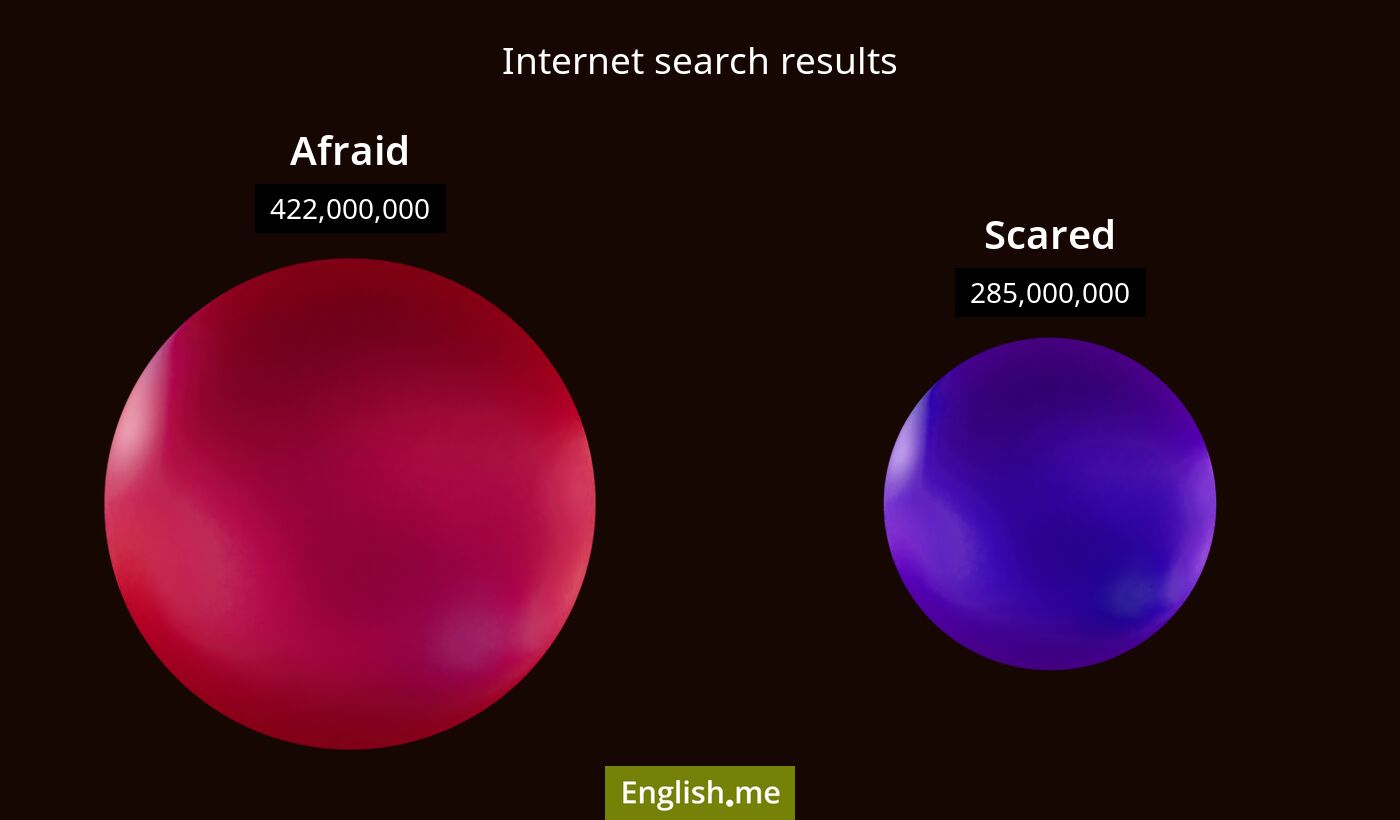
Which one is more common?
Quick check
There was a look on his face.
Afraid can’t go before a noun, so it has to be a scared look.
¿Has visto un error en este artículo? Avísanos