

Tacit vs. unspoken: what’s the difference?
The short answer
The word tacit is often used in formal or legal contexts to describe implicit agreements or understandings, suggesting a stronger or more official recognition despite the lack of verbal acknowledgment. Unspoken is more general and can describe anything that is understood without being said, often emphasizing the silence or lack of verbal expression.
What they have in common
Both tacit and unspoken refer to something that is understood or implied without being directly stated. They often describe agreements, understandings, or communications that are not verbally articulated.
Examples
tacit
- They had a tacit agreement to share the profits equally.
- Her nod was a tacit approval of the plan.
- The company had a tacit understanding with the government.
unspoken
- There was an unspoken rule about not using phones during meetings.
- Their friendship had many unspoken boundaries.
- He adhered to an unspoken code of conduct.
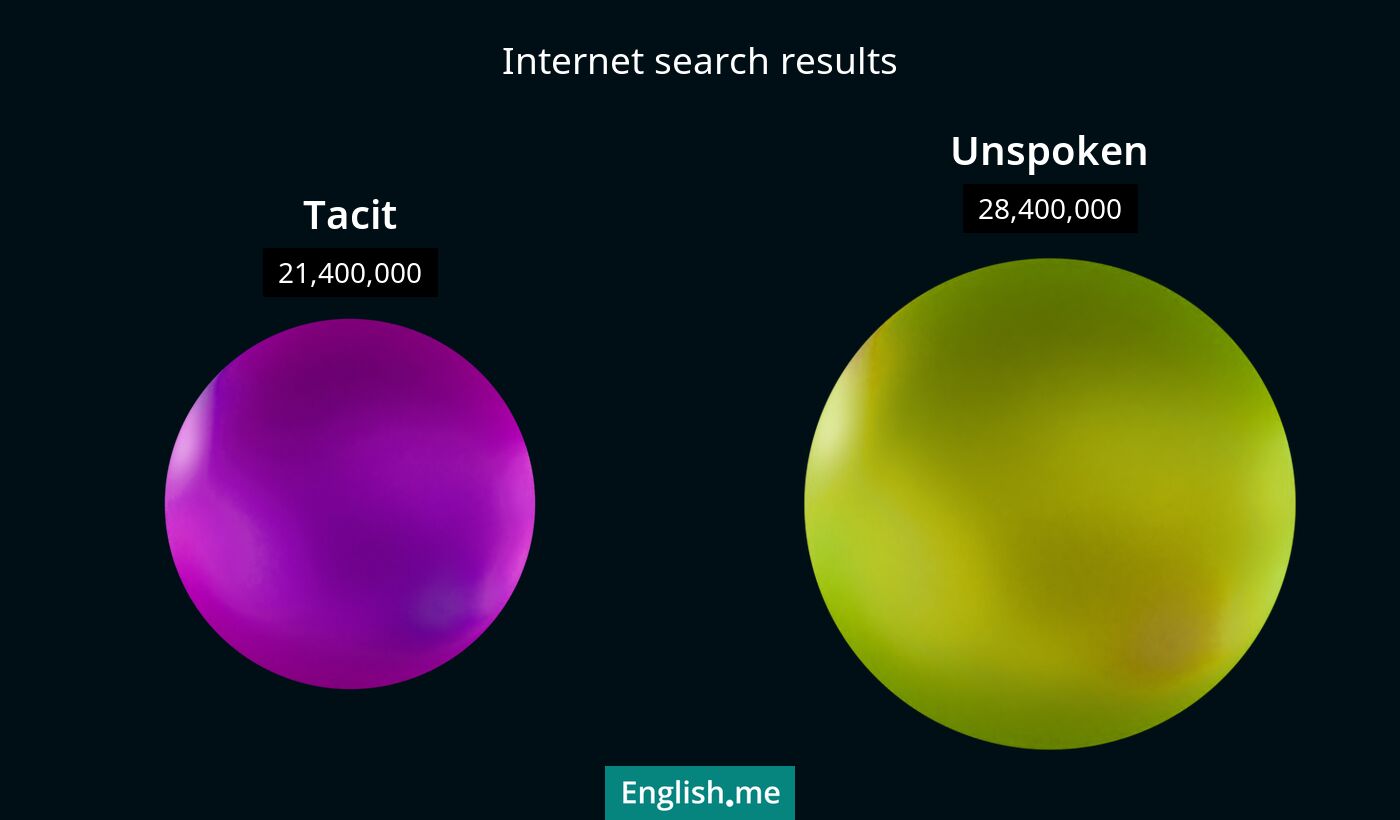
Which one is more common?
Нашли ошибку в статье? Сообщите нам